



Start talking “energy efficiency” and most preservationists and restorers begin to tremble.
Images of replacement windows, blown-in insulation and general mass-destruction of historic materials appear in our minds. However, it can not be denied that this timely topic of concern to most homeowners, and those of us with older homes have the added burden of how to incorporate energy consumption improvements in a manner which is thoughtful to our home’s historic integrity. Most everyone is doing something about it; many of these efforts, frankly, are wrecking the place. What we need to know is what can we do to make our older home more energy efficient and preserve it at the same time?
Insulation
I’ll start with the most obvious topic of discussion. While it is true that an entire house would be insulated in the ideal world, those of us with old houses know that we rarely get to operate within ideals — that is part of the charm and character we love so much in our old place!
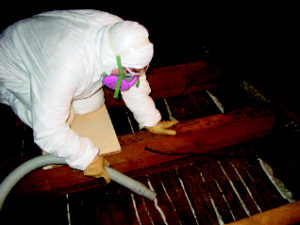
Selecting the right products and installing them under the right conditions is critical to getting the results you want without unexpected outcomes. Many manufacturers and installers recommend insulation must have an R-value of R-38 — R-60 to be effective. These numbers represent new construction applications and are simply not realistic when trying to retrofit. Something is better than nothing, and if you have access to an area of your house to insulate use the highest R-value you can fit in the space. Never cram insulation as crushing it negates its effectiveness.
This restorer, from experiences in my own old house and through unfortunate examples from countless clients, has seen little good come from the expensive effort of blowing in insulation. The unpredictable framing and large cavities of older construction means coverage is inconsistent and leaves the product to sink and rot timbers. We have also seen its installation blow the plaster off more than one wall!
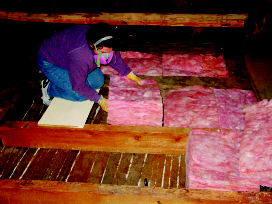
The best effort you can make is to insulate your attic floor. We recently added R-30, (using what depth as we had in our joists) to our attic floor and noticed a dramatic improvement immediately. Any time you insulate, you must also properly ventilate so that moisture is not trapped against your building materials.
Weatherize
It is essential that air leaks are controlled. The Department of Energy estimates homeowners can save more than 10 % in energy costs simply by sealing off drafts that draw heat (and air conditioning) out of the house. Additionally, any insulating efforts will be drastically reduced if you do not work to eliminate air leaks. Home efficiency efforts only work really well when both heat and air are controlled.
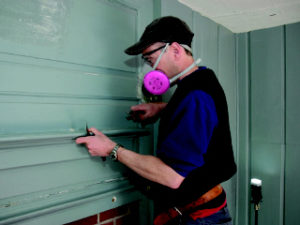
Be sure gaps and cracks, inside and out, are properly caulked and sealed, and that you are not allowing major air flow (loss) out your fireplaces, heating ventilation and attic access. Keep doors and windows weather-stripped and tight, and don’t forget utility access points as significant culprits of air leakage.
Windy days are the best time to evaluate leaks; one easy method to check for leaks is to light an incense stick and hold it in front of various areas and openings. Drifting smoke indicates drafty air leaks.
Maintenance
Many good energy efficiency efforts are just sound maintenance that we lose sight of or just never get around to. When houses fall into disrepair and building materials are allowed to fail, energy loss becomes inevitable. Keeping a solid coat of sealer (paint) on your exterior, addressing cracks and gaps in building materials, and keeping doors and windows in good working condition represent a lot of small efforts that really add up.
From Our Trusted Partners
Featured property
Is it really an “improvement”?
Drastic measures or complete overhauls are not necessary in order to make valuable strides toward living more efficiently. Whenever you consider changes that involve the demolition of original materials you need to consider what you are losing as well as what you are gaining. Imagine that piece of woodwork or plaster in your hand was hand-made by someone and is irreplaceable. Many modern upgrades also undermine older systems and cause more harm than good so consider compatibility and get advice from an objective old house expert (not just the person you are buying from).
New is not necessarily better or even more efficient – old windows can be made energy efficient using some common sense and elbow grease. You can work with your existing building fabric, preserving original craftsmanship, while at the same time protecting your pocket book.
Here are some old-house-friendly solutions:
• Install proper weatherstripping around doors and windows
• Make sure glass in doors and windows is tightly glazed
• Use door and window locks to keep them shut tightly
• Install storm doors and windows
• Seal gaps in structural and foundation materials with caulking or spray foam
• Limit draw from chimneys by keeping dampers closed when not in use
• Caulk gaps in siding and around doors and windows
• Repair rotten siding and keep paint/sealing coating in good condition
• Make sure gutters and drainage is working
• Close gaps in HVAC, chimneys and fireplaces
• Install good window treatments that seal drafts
• Lay rugs over drafty floor areas and in front of doors
• Insulate your attic floor